

Creating your own Wikipedia page sounds simple. You write about yourself, hit publish, and suddenly you have Wikipedia credibility. Right?
Not quite.
Wikipedia deletes over 90% of pages created by subjects about themselves. Most fail within the first 30 days. The reason is simple. Most people don’t understand Wikipedia’s strict rules about notability, reliable sources, and conflict of interest.
If you’re thinking about creating a Wikipedia page for yourself, this guide will show you exactly what works, what doesn’t, and whether you should even try.
Can You Legally Create Your Own Wikipedia Page?
Yes, you can create your own Wikipedia page. Wikipedia doesn’t ban it. But here’s what most people miss.
Wikipedia has a conflict of interest policy. When you write about yourself, you naturally want to show your best side. You skip negatives. You add promotional language. You cherry-pick achievements.
Wikipedia editors spot this immediately.
The result? Your page gets flagged, challenged, or deleted.
Wikipedia allows paid editing if you disclose it. You must be transparent. You cannot use sockpuppet accounts. You cannot hide your relationship to the subject.
But even with disclosure, self-created pages face intense scrutiny.
The Harsh Truth About Self-Created Wikipedia Pages
Here’s what happens in reality.
You spend hours researching. You write carefully. You add sources. You follow the guidelines (or think you do). You hit publish.
Within 24 hours, a Wikipedia editor flags your page for deletion.
Why?
Promotional tone. Even neutral language can sound promotional when you write about yourself.
Unreliable sources. You cite press releases, blog mentions, or social media. Wikipedia rejects these.
Insufficient notability. You think local success equals Wikipedia-worthy. It doesn’t.
Conflict of interest. Editors see you created the page about yourself. They automatically distrust it.
One mistake and your page is gone. Worse, Wikipedia marks your username. Future attempts become harder.
Do You Actually Qualify for a Wikipedia Page?
Before writing anything, answer this question honestly.
Have major newspapers, books, or academic journals written about you independently?
Notice the word “independently.” Press releases don’t count. Interviews you arranged don’t count. Blog posts from small websites don’t count.
Wikipedia wants independent, reliable, third-party sources.
You Likely Qualify If:
You’ve been featured in major national or international newspapers like The New York Times, BBC, Reuters, or major publications in your country.
You’ve published peer-reviewed research or books through established publishers.
You’ve received significant awards or recognition documented by credible organizations.
You hold or held prominent positions in government, major corporations, or respected institutions.
You’re an established professional in arts, sports, or entertainment with documented achievements covered by reliable media.
You Don’t Qualify If:
Your only coverage is from press releases or sponsored content.
You’ve been mentioned in small blogs or community websites.
You’re successful locally but lack national or international media attention.
Your achievements exist primarily on social media or self-published platforms.
Most successful business owners, even very wealthy ones, don’t qualify. Success and notability are different things.
If you’re unsure, check Wikipedia’s notability guidelines or get a professional assessment.
What Sources Does Wikipedia Actually Accept?
This is where most people fail.
Wikipedia only accepts sources from established, reliable publishers. Here’s what works and what doesn’t.
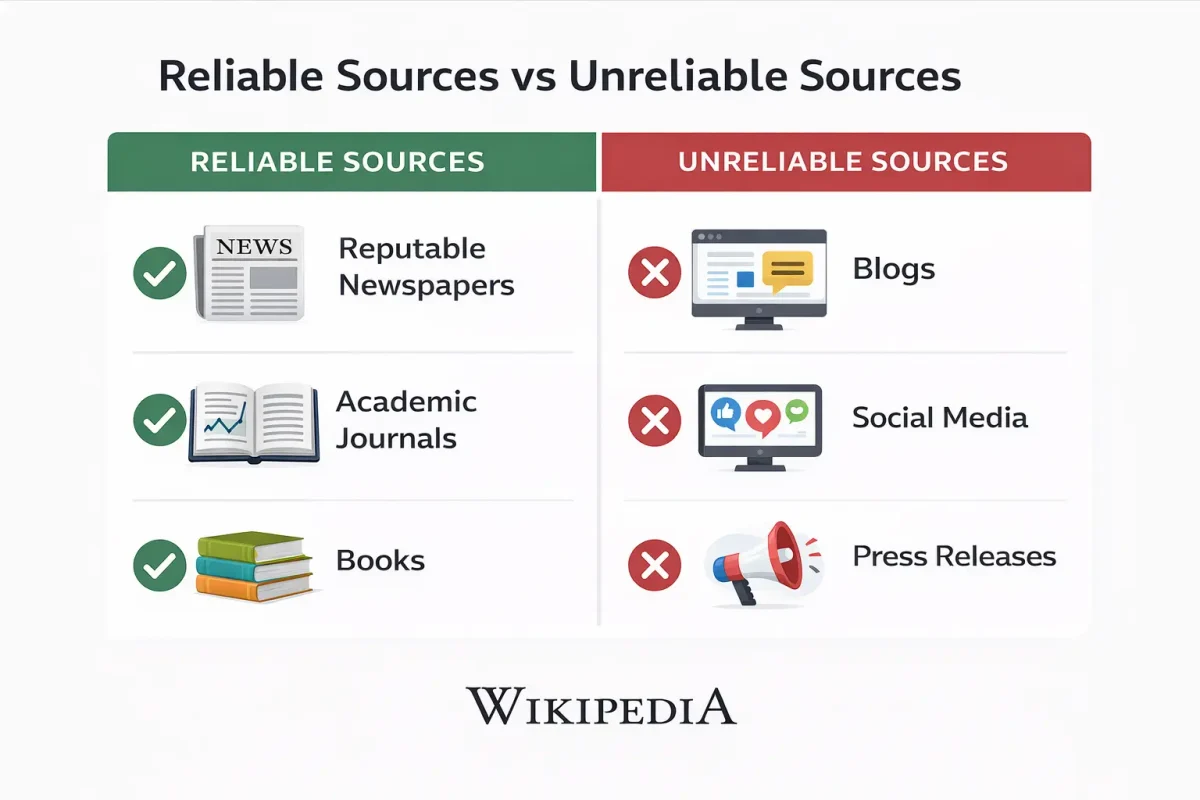
Reliable Sources Wikipedia Accepts:
- Major newspapers and news organizations (The Guardian, Al Jazeera, major national papers)
- Academic journals and peer-reviewed publications
- Books published by established publishers
- Government documents and official records
- Recognized industry publications with editorial oversight
Sources Wikipedia Rejects:
- Press releases (even if picked up by news sites)
- Social media posts and YouTube videos
- Personal blogs and Medium posts
- Sponsored articles and paid content
- Self-published materials
- Company websites and promotional content
Here’s a test. If the article was written because you or your team contacted them, it probably doesn’t count.
Wikipedia wants journalists who independently decided you were worth writing about.
Step-by-Step Guide to Create a Wikipedia Page for Yourself
If you genuinely qualify, here’s the process.
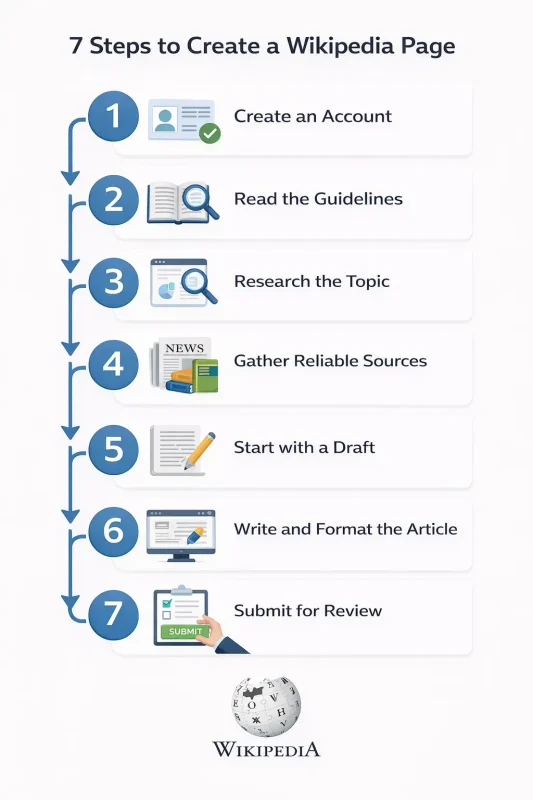
Step 1: Research Thoroughly
Read 10 Wikipedia pages about people similar to you. Notice the tone. Notice the structure. Notice how they cite sources.
Wikipedia’s tone is encyclopedic. That means neutral, factual, and verifiable. No opinions. No marketing language.
Check Wikipedia’s manual of style. Study the notability guidelines for your profession.
Time investment: 3-5 hours
Step 2: Gather Your Sources
Collect every reliable source that mentions you. Organize them by topic.
You need at least 5-7 independent reliable sources for a basic page. More is better.
For each source, note:
Publication name and reputation
Author credentials
Date of publication
Specific facts you can cite
Make sure these sources aren’t connected to you financially or personally.
Time investment: 5-10 hours
Step 3: Create a Wikipedia Account
Use your real name if possible. Transparency helps.
Don’t create multiple accounts. Wikipedia tracks IP addresses and browser fingerprints.
Before creating a page, edit a few existing Wikipedia articles. Fix typos. Add sources. Build a positive editing history.
This shows you understand Wikipedia culture and aren’t just there for self-promotion.
Time investment: 2-3 days (spread out)
Step 4: Draft the Page in Your Sandbox
Never create a page directly. Use Wikipedia’s sandbox feature.
Start with a basic structure:
Lead section (2-3 sentences summarizing who you are)
Early life and education
Career
Achievements and recognition
References
Keep it short. Aim for 300-500 words initially. You can expand later if the page survives.
Write in third person. Never use “I” or “my.”
Cite every claim. If you can’t cite it from a reliable source, delete it.
Time investment: 10-15 hours
Step 5: Submit for Review
Wikipedia has a process called Articles for Creation (AfC).
Submit your draft through AfC. Wikipedia volunteers review it.
Expect rejection the first time. Most drafts get rejected 2-3 times before approval.
When rejected, read the feedback carefully. Make the requested changes. Resubmit.
Don’t argue with reviewers. Don’t complain. Just improve and resubmit.
Time investment: 2-4 weeks (waiting for review)
Step 6: Disclose Your Conflict of Interest
On your Wikipedia talk page and user page, clearly state:
“I am [Your Name]. I created this article about myself following Wikipedia’s conflict of interest guidelines.”
Transparency doesn’t guarantee approval, but hiding your identity guarantees problems.
Step 7: Be Prepared for Editing and Challenges
Once published, anyone can edit your page.
People will remove content you think is important. They’ll add criticism. They’ll challenge your sources.
Don’t engage in edit wars. Don’t keep reverting changes.
If someone proposes deletion, respond calmly on the talk page with reliable sources supporting notability.
Why Most Self-Created Pages Fail (And How to Avoid It)
After creating 100+ Wikipedia pages professionally, I’ve seen the same mistakes repeatedly.
Mistake 1: Using Promotional Language
You write “leading expert” or “successful entrepreneur.” Wikipedia deletes this instantly.
Fix: Use neutral language. “Works as” instead of “is a leading.” Let achievements speak for themselves.
Mistake 2: Citing Unreliable Sources
You link to your company blog, LinkedIn, or a press release your PR team sent out.
Fix: Only use sources Wikipedia explicitly considers reliable. When in doubt, leave it out.
Mistake 3: Including Too Much Detail
You want to list every award, every project, every achievement.
Fix: Wikipedia is a summary, not a resume. Include only the most significant, well-documented achievements.
Mistake 4: Writing Too Soon
You think you’re notable, but you don’t have enough independent coverage yet.
Fix: Wait. Build your career. Get more media coverage. Come back in 1-2 years.
Mistake 5: Ignoring Feedback
Wikipedia reviewers tell you what’s wrong. You ignore it and resubmit the same content.
Fix: Actually read the feedback. Make the changes they request. Resubmit only when fixed.
Should You Create Your Own Wikipedia Page or Hire an Expert?
Here’s the honest answer.
If you’re genuinely notable with strong reliable sources, you can create your own page. But it will take 40-60 hours of work, multiple rejections, and constant monitoring.
Most people underestimate the difficulty.
Hiring a professional Wikipedia page creation service costs money, but it’s faster, safer, and more likely to succeed.
Professional Wikipedia writers know:
What sources Wikipedia actually accepts
How to write in encyclopedic tone without sounding promotional
How to navigate the Articles for Creation process
How to handle challenges and deletion discussions
How to monitor and protect your page after publication
If your time is valuable and you want to avoid rookie mistakes, professional help makes sense.
At Khan IT, we’ve created 100+ Wikipedia pages with a 95% approval rate. We only work with genuinely notable clients. If you don’t qualify, we tell you honestly.
What Happens After Your Page Goes Live?
Congratulations, your page is approved. Now what?
Your page is public. Anyone can edit it. This includes:
Competitors adding criticism
Vandals deleting content
Well-meaning editors removing sections they think are promotional
You need to monitor your page regularly. Set up Wikipedia alerts. Check weekly.
If someone makes an incorrect edit, don’t just revert it. Discuss on the talk page. Provide sources. Follow Wikipedia’s dispute resolution process.
If someone proposes deletion, respond professionally with evidence of notability.
Most pages survive if they met notability criteria initially. But you must stay vigilant.
Frequently Asked Questions
How long does it take to create a Wikipedia page?
If you do it yourself, expect 40-60 hours of work spread over 4-8 weeks. Most submissions get rejected 2-3 times before approval.
Professional services typically take 6-8 weeks from start to approval.
Can I create a Wikipedia page if I’m not famous?
Fame and notability are different. You don’t need to be famous. You need significant independent coverage in reliable sources.
Local business owners, regional politicians, and industry experts often don’t qualify, even if they’re successful.
What happens if my page gets deleted?
You can request deletion review if you believe the deletion was wrong. But if the page was deleted for legitimate reasons (lack of sources, promotional tone), resubmitting won’t help.
Fix the underlying issues first.
Can I add my own achievements to an existing Wikipedia page?
Technically yes, but Wikipedia’s conflict of interest policy strongly discourages it. Better to propose changes on the talk page and let independent editors add them.
Is it worth creating a Wikipedia page?
If you genuinely qualify, yes. Wikipedia pages provide credibility, improve search engine visibility, and establish authority.
But if you’re borderline notable or lack reliable sources, your time is better spent building your achievements and media presence first.
Final Thoughts
Creating a Wikipedia page for yourself is possible. But it’s harder than most people think.
Before starting, ask yourself:
Do I have 5-7 independent reliable sources?
Can I write about myself without sounding promotional?
Am I prepared for rejection and revision?
Do I have time to monitor and defend the page long-term?
If you answered no to any of these, consider waiting or hiring professional help.
Wikipedia is a powerful credibility tool, but only if done right.
Want to know if you qualify for a Wikipedia page? Contact Khan IT for a free eligibility assessment. We’ll tell you honestly whether you’re ready or what you need to build first.